2Dokuz Eylul University, Department of Physiology, Izmir, Turkiye
3Koc University, Department of Neurology, Istanbul, Turkiye; Koc University, Research Center for Translational Medicine, Istanbul, Turkiye
Abstract
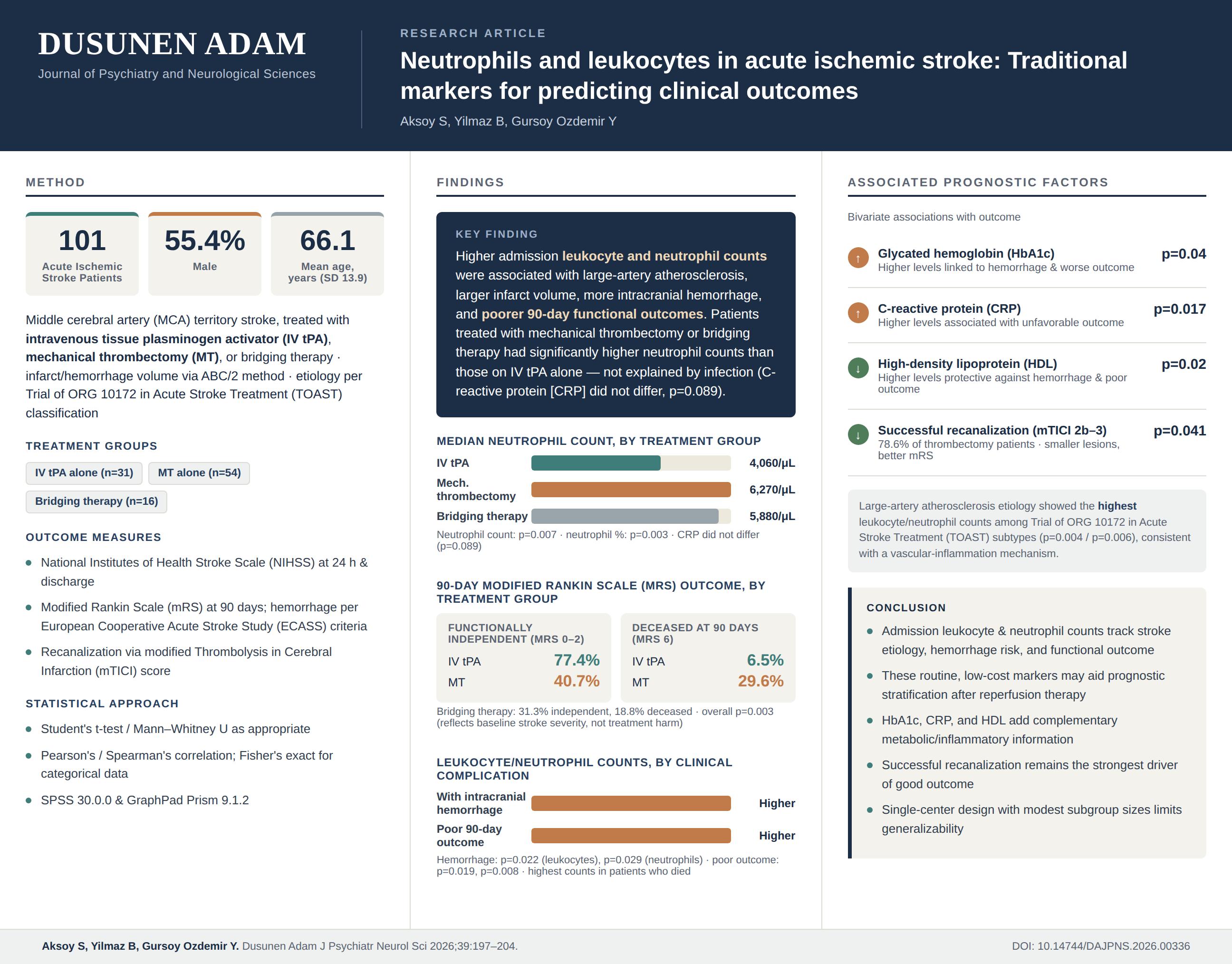
Objective: Systemic inflammation, particularly involving leukocytes and neutrophils, plays a critical role in stroke pathophysiology and lesion evolution and may influence treatment safety and outcomes. This study aimed to evaluate the prognostic value of admission leukocyte and neutrophil counts in patients with acute ischemic stroke treated with intravenous thrombolysis and/or mechanical thrombectomy.
Methods: A total of 101 patients with ischemic stroke in the middle cerebral artery (MCA) territory who were treated with intravenous tissue plasminogen activator (IV tPA), mechanical thrombectomy (MT), or bridging therapy were analyzed. Demographic, clinical, laboratory, and neuroimaging data were collected. Infarct and hemorrhage volumes were calculated using the ABC/2 method. Clinical outcomes were assessed using National Institutes of Health Stroke Scale (NIHSS) scores and the modified Rankin Scale (mRS). Associations between inflammatory markers, radiological findings, hemorrhagic transformation, and functional outcomes were analyzed.
Results: Higher admission leukocyte and neutrophil counts were significantly associated with large artery atherosclerosis and were observed in patients undergoing mechanical thrombectomy or bridging therapy. Elevated leukocyte and neutrophil levels were associated with larger infarct volumes, an increased risk of intracranial hemorrhage, and poorer functional outcomes. Patients with unfavorable outcomes and those who died within 90 days had significantly higher leukocyte and neutrophil counts. Higher glycated hemoglobin (HbA1c) and C-reactive protein (CRP) levels and lower high-density lipoprotein (HDL) levels were associated with hemorrhagic transformation and poor prognosis. Successful recanalization was associated with smaller infarct volumes and better functional outcomes.
Conclusion: Admission leukocyte and neutrophil counts are associated with stroke etiology, hemorrhagic complications, and functional outcomes following reperfusion therapy. These readily available inflammatory biomarkers may serve as useful prognostic indicators in the management of acute ischemic stroke.
Graphical Abstract