2Akdeniz University Faculty of Medicine, Department of Psychiatry, Antalya, Turkiye
Abstract
Objective: Brexpiprazole (BRX) is an antipsychotic used as an adjunctive agent in the treatment of major depressive disorder. We aimed to evaluate the effectiveness of BRX in treatment-resistant depression (TRD).
Methods: This study was conducted between May 1, 2024 and January 1, 2025. Medical records of patients who were started on BRX as adjunctive treatment for TRD were retrospectively reviewed. Patient files containing sociodemographic data and scores from the Beck Depression Inventory (BDI), Beck Anxiety Inventory (BAI), and Global Assessment Scale (GAS) were included in the analysis.
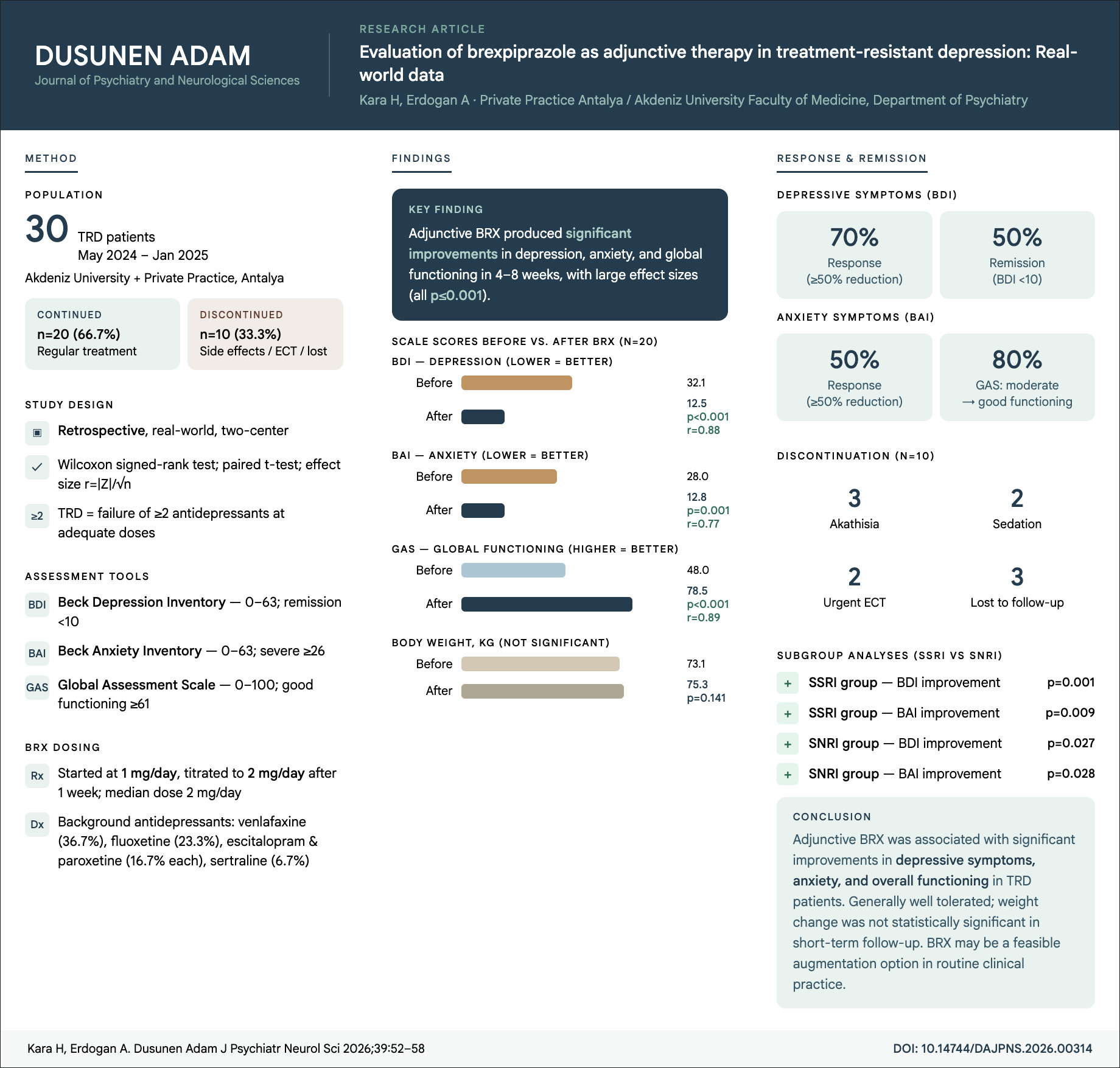
Results: A total of 30 patients were included in the study. The mean age was 32.50±11.38 years (range: 18–63), and 63.3% (n=19) were female. The median BRX dose was 2 mg/day. Of the 30 patients, 20 (66.7%) continued treatment regularly. Among those who discontinued treatment, three patients stopped due to akathisia, two due to sedation, and two due to an urgent need for electroconvulsive therapy. For the 20 patients who continued treatment, scale scores were reassessed during follow-up visits between weeks 4 and 8. A significant improvement was observed in both BDI scores (32.05±8.96 vs. 12.45±9.74; p<0.001) and BAI scores (28.00±10.07 vs. 12.75±10.83; p=0.001) after treatment. Meanwhile, no significant change was observed in body weight (73.05±20.93 kg vs. 75.30±20.32 kg; p=0.123). Among patients whose GAS scores indicated moderate functioning before BRX treatment, 80% (n=16) achieved good functioning after treatment.
Conclusion: BRX may be an effective adjunctive treatment option for patients with TRD, with potential benefits for anxiety symptoms and overall functioning. Although some patients experienced weight gain, this effect did not appear to be clinically significant in our sample.
Graphical Abstract