2Baskent University, Faculty of Medicine, Department of Neurology, Ankara, Turkiye
Abstract
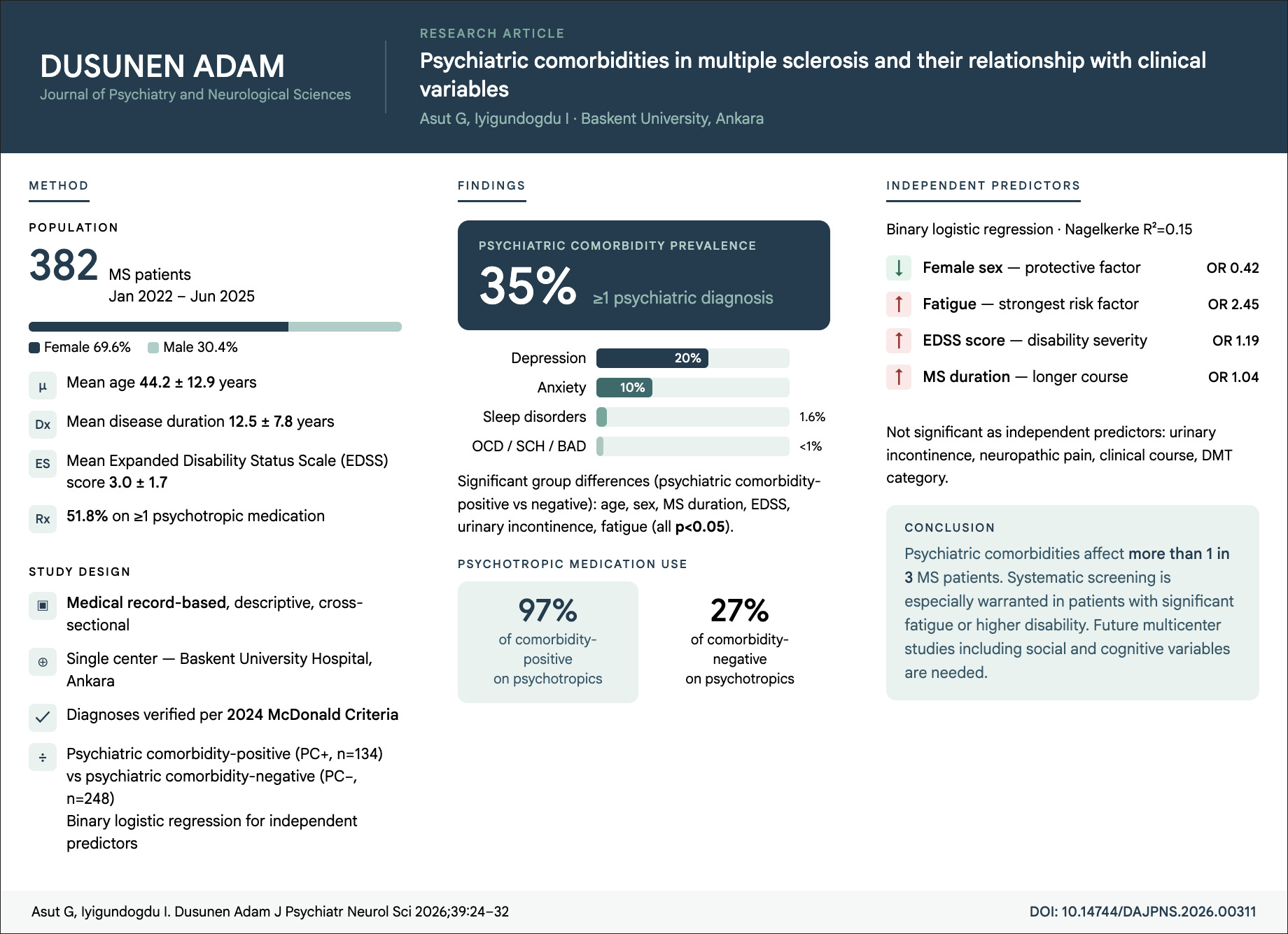
Objective: This study aimed to determine the prevalence of clinically documented psychiatric diagnoses in patients with multiple sclerosis (MS) and to identify demographic and clinical predictors associated with an increased risk of comorbidity.
Methods: This study included 382 patients with MS who were followed at a university hospital between January 2022 and June 2025. Medical records were reviewed for demographic characteristics, disease course and duration, disability severity (Expanded Disability Status Scale [EDSS]), comorbid neurological symptoms, disease-modifying therapies, and documented psychiatric diagnoses. Patients were categorized into those with psychiatric comorbidity (PC+) and those without psychiatric comorbidity (PC–). Univariate analyses and binary logistic regression were performed to identify independent predictors.
Results: At least one psychiatric diagnosis was present in 35% of the patients. Depression (20%) and anxiety disorders (10%) were the most common conditions. Overall, 51.8% of patients were using at least one psychotropic medication, prescribed either for psychiatric diagnoses or for MS-related symptoms such as fatigue and neuropathic pain. Comparison of the PC+ and PC- groups revealed significant differences in age, sex, duration of MS, disease severity, presence of urinary incontinence, and fatigue. Logistic regression analysis showed that female sex was independently associated with lower odds of psychiatric comorbidity, whereas fatigue, higher EDSS scores, and longer MS duration were associated with higher odds.
Conclusion: Psychiatric comorbidities are prevalent in MS, affecting more than one-third of patients. This study comprehensively evaluated the risk factors identified in the literature and found that, when assessed together, most did not remain independent predictors. Key independent predictors for psychiatric comorbidity include female sex, disability severity, disease duration, and fatigue.
Graphical Abstract